
Our Curriculum
We don't just tell you we're teaching your child. We show you.
ELM+: a great curriculum, made ours, proved in your Daily Journal.
Don't take our word for it. Open your Daily Journal.
Every lesson comes with a note written just for parents: what your child did, and why it matters at their age. When your child's class does a lesson, it shows up in your Daily Journal in the Child Care Seer app, usually with a photo. By pickup, you already know what to ask about.
Real entries, exactly as families received them:
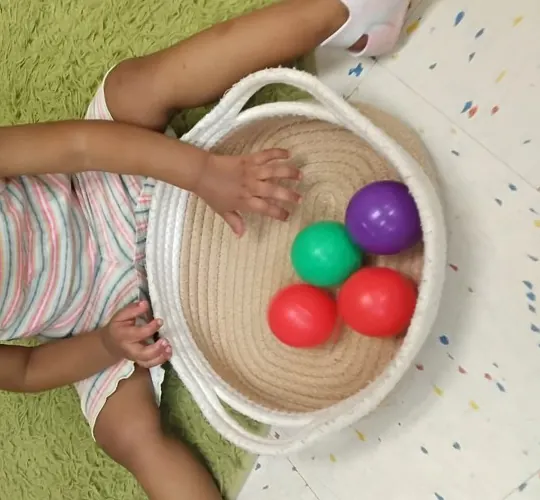
Balls and Baskets
Today everyone had a ball and there were baskets to aim at. Children rolled, threw, dropped and carried, filling the baskets and tipping them out again in whatever order suited them. Open-ended ball play lets a toddler practice a dozen different movements without being asked to do any of them, which is why so much gets learned in it.
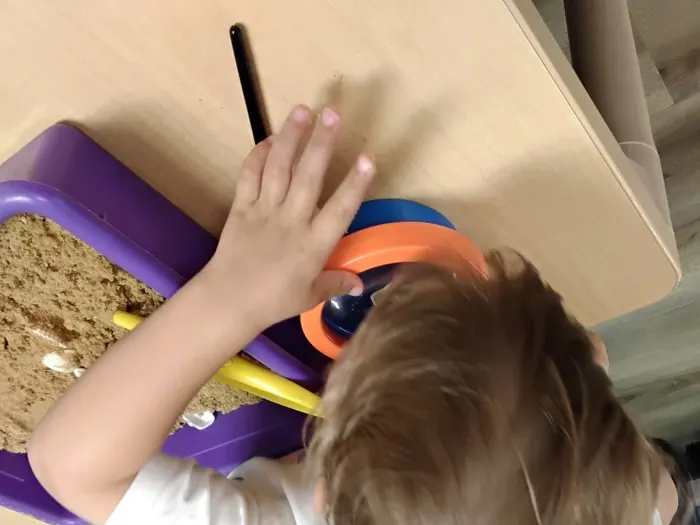
Sand and Shells
Today we ran our hands through dry sand and found shells hidden in it. Children dug, sifted, picked shells out one at a time and buried them again, feeling the difference between the two textures. Fingers learn a great deal from material that shifts and gives, and it is the kind of learning that only happens by touching.
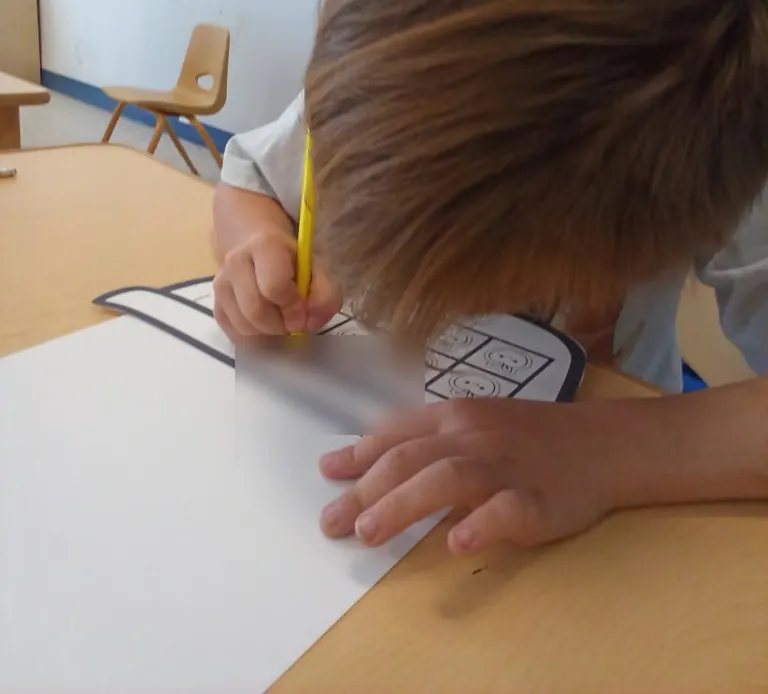
Counting to Ten and Meaning It
Today we counted up to ten objects, tying each number word to exactly one thing as we went. Reciting numbers is easy and means little; making each number land on one object is the part that turns counting into arithmetic.
What is ELM+?
A curriculum you can trust.
Our classrooms teach from Early Learning Matters (ELM), a curriculum developed at Purdue University for children from birth to age five and approved by the Virginia Department of Education. It's built on play and hands-on discovery, and it's aligned with Virginia's Early Learning and Development Standards, so the skills your child practices here are the ones Virginia maps out from birth to kindergarten.
Then we made it ours.
A great curriculum is a starting point. So we enhanced it with lessons we write ourselves, for our own classrooms: more music and movement, more science you can touch, cooking, art, and afternoon moments that make the whole day count. That's the "plus" in ELM+, and you won't find it anywhere else.
- Developed at Purdue University
- Approved by the Virginia Department of Education
- Aligned with Virginia's Early Learning Standards
One big idea, every age.
Our lessons share big ideas across ages, and every classroom explores them at just the right level. Take listening and sounds:
Listening to Everyday Sounds
A knock, a bark, running water: we make each sound out loud, and babies watch our mouths as closely as the pictures.
Which Animal Will We Be?
Children choose the farm animals, and we make every noise together, as many turns as they want.
Zoo Animal Sounds
Polar Bear, Polar Bear, What Do You Hear? Page by page, naming each animal and the sound it makes.
Rhyme or Not?
Which pairs rhyme, and which don't? Saying no takes listening carefully enough to be sure.
Rhymes We Find Ourselves
Hunting a whole song for its rhyming pairs, without being told where to look.
Or sink or float, one of our own ELM+ lessons:
Sink or Float
A sponge, a block, a spoon and a ball: each lands in the "went down" tray or the "stayed up" tray.
Sink or Float
One at a time, things go into the water tub. Down it goes, or it's floating?
Sink or Float
Before each object goes in, we guess: sink or float? Then we see if the water agrees.
A peek at our lessons.
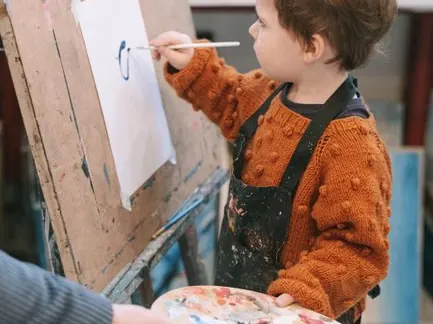
Smocks, Easels and Stencils
We meet the tools real artists use (a smock, an easel, a stencil) and get trusted with them.
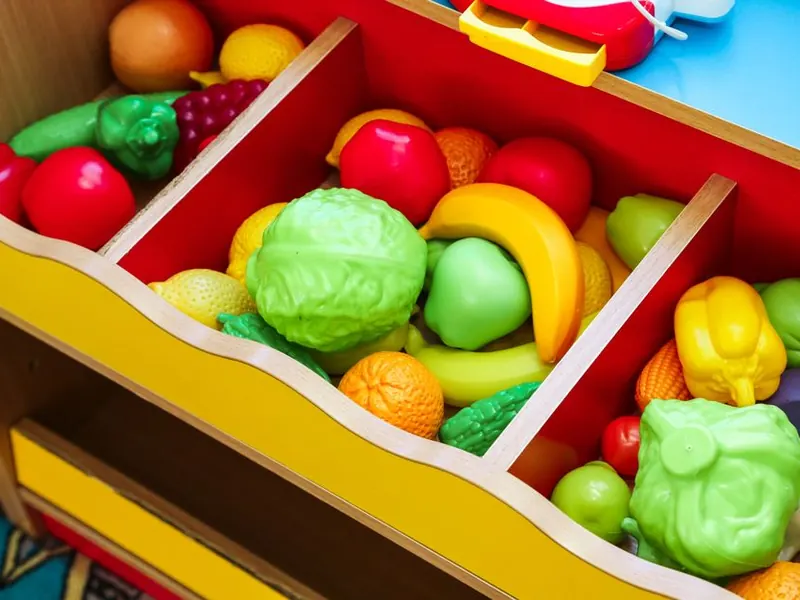
Playing Store
Baskets filled, groceries handed over, and everyone takes a turn behind the counter.

Mixing Colors
One stroke of red, one of yellow, a swirl where they meet, and orange shows up.
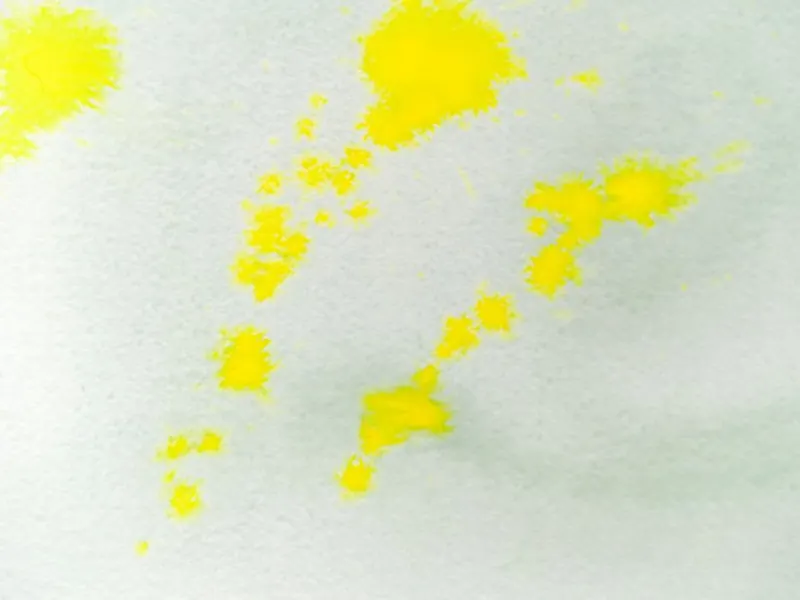
Painting With Cotton Balls
Cotton balls dabbed in yellow paint: how hard do you press to make a mark?
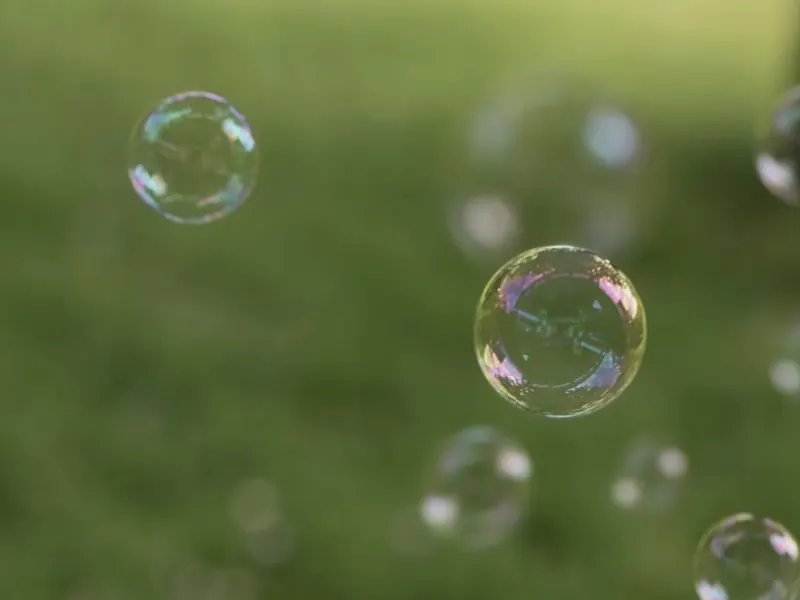
Watching Bubbles Drift
Bubbles float across the room, and little eyes follow each one until it pops.
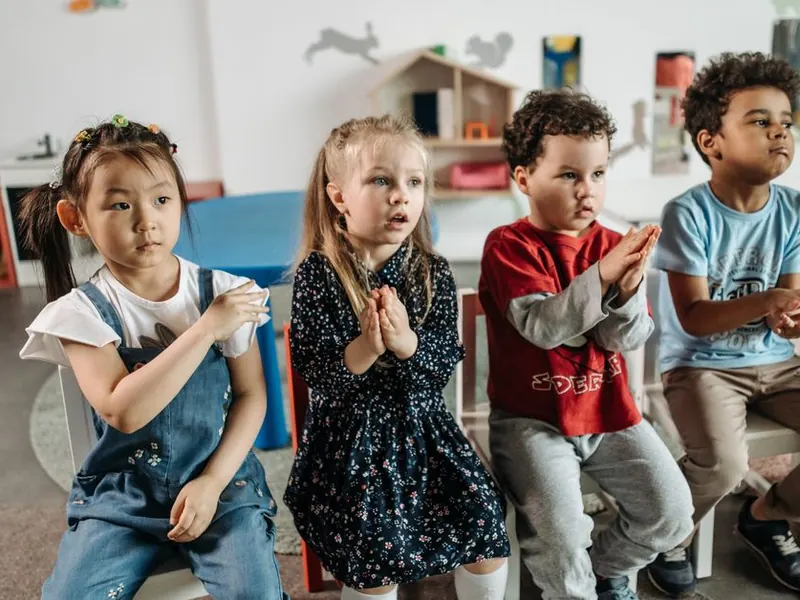
Follow the Beat
Clap it back: two beats, then three, then more. Memory and rhythm, working together.
Structure, and room to grow.
Lessons give the day its shape. Between them there's still real time to play, explore, and follow their own curiosity. That's the balance Callahan is built on.